+86-15134803151
- English
- Chinese
- French
- German
- Portuguese
- Spanish
- Russian
- Japanese
- Korean
- Arabic
- Irish
- Greek
- Turkish
- Italian
- Danish
- Romanian
- Indonesian
- Czech
- Afrikaans
- Swedish
- Polish
- Basque
- Catalan
- Esperanto
- Hindi
- Lao
- Albanian
- Amharic
- Armenian
- Azerbaijani
- Belarusian
- Bengali
- Bosnian
- Bulgarian
- Cebuano
- Chichewa
- Corsican
- Croatian
- Dutch
- Estonian
- Filipino
- Finnish
- Frisian
- Galician
- Georgian
- Gujarati
- Haitian
- Hausa
- Hawaiian
- Hebrew
- Hmong
- Hungarian
- Icelandic
- Igbo
- Javanese
- Kannada
- Kazakh
- Khmer
- Kurdish
- Kyrgyz
- Latin
- Latvian
- Lithuanian
- Luxembou..
- Macedonian
- Malagasy
- Malay
- Malayalam
- Maltese
- Maori
- Marathi
- Mongolian
- Burmese
- Nepali
- Norwegian
- Pashto
- Persian
- Punjabi
- Serbian
- Sesotho
- Sinhala
- Slovak
- Slovenian
- Somali
- Scots Gaelic
- Shona
- Sindhi
- Sundanese
- Swahili
- Tajik
- Tamil
- Telugu
- Thai
- Ukrainian
- Urdu
- Uzbek
- Vietnamese
- Welsh
- Xhosa
- Yiddish
- Yoruba
- Zulu
- Kinyarwanda
- Tatar
- Oriya
- Turkmen
- Uyghur



What is ferro calcium used for?
2026-03-28
If you ask around, you’ll often hear it’s just a deoxidizer and desulfurizer in steelmaking. That’s true, but it’s like calling a Swiss Army knife just a blade – it misses the nuance and the real craft. The oversimplification, especially online, glosses over the critical decisions on when, how much, and what grade to use, which is where the cost and quality battles are won or lost.
Beyond Basic Deoxidation: The Practical Nuances
In the melt shop, we don’t just throw in ferro calcium because the spec sheet says so. The timing is everything. Adding it too early, when the bath is still wild with oxygen, is a waste – it gets consumed before it can do its finer work. You wait for a preliminary deoxidation, often with aluminum or ferrosilicon, to calm things down. Then, the calcium comes in. Its real magic isn’t just grabbing leftover oxygen; it’s modifying the inclusions. It turns hard, abrasive alumina (Al2O3) stringers into softer, globular calcium aluminates. This is the difference between a bearing steel that fails prematurely and one that lasts. I’ve seen batches where they skimped on the Ca treatment to save a few bucks, only to have the wire drawing operation plagued by breaks – an expensive saving.
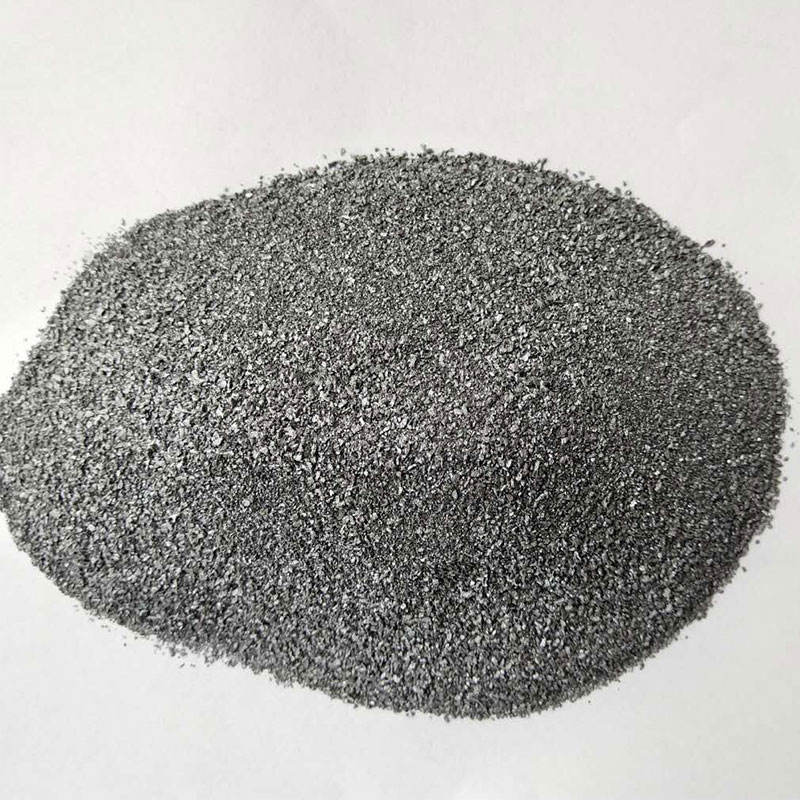
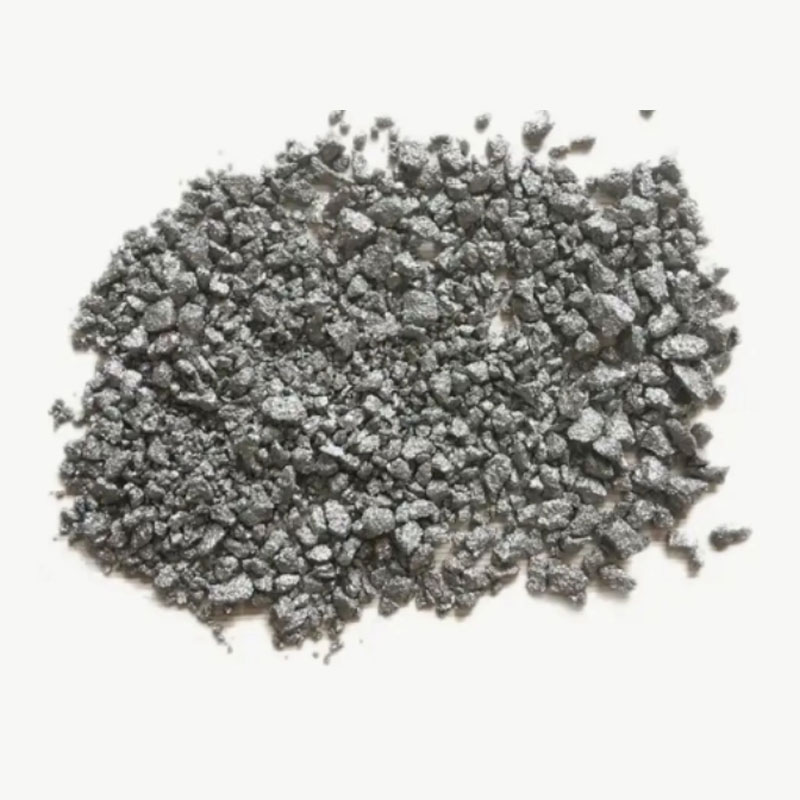
The alloy’s form factor matters more than people think. We used to use bulk lumps, but switching to cored wire – where the ferro calcium powder is packed into a steel sheath – was a game-changer. The injection depth and yield improved dramatically. You get more calcium into the melt where it’s needed, not burnt off at the surface. Suppliers like Inner Mongolia Xinxin Silicon Industry Co.,Ltd have entire lines for these products, which tells you how central this delivery method has become. Their range, from standard ferrosilicon to specialized cored wires, highlights the industry’s move towards precision.
Then there’s the sulfur story. Yes, it’s a desulfurizer, but its efficiency is tightly coupled with the slag basicity and temperature. In a basic slag, high temperature operation, calcium’s affinity for sulfur really shines, forming CaS that goes into the slag. But if your conditions are off, you’re not getting the deep desulfurization you paid for. It’s a tool, not a magic wand.
The Casting Connection: Inoculation and Morphology Control
This is where ferro calcium steps out of the steel shop and into the foundry. In ductile iron production, it’s a key component in nodulizing alloys, often with magnesium and rare earths. The calcium helps to inoculate the melt, promoting the formation of spherical graphite. But it’s a balancing act. Too little, and you don’t get the full nodularizing effect; too much, and you can increase dross formation. I recall a trial with a high-calcium inoculant that led to miserable slag buildup in the ladle and crusty surfaces on the castings. We dialed it back, blending in a different grade, and the problem cleared up.
The silicon barium calcium alloys mentioned by producers like Xinxin Silicon are a classic example of this application. The barium is said to prolong the inoculation effect, fighting fade. Whether the added cost of barium is justified depends entirely on your holding times and casting section sizes. For thin-section, fast-poured castings, a standard calcium silicon might do just fine. It’s this kind of practical, cost-aware judgment that separates a useful spec from an over-engineered one.
Beyond iron, in aluminum casting, high-purity calcium additives are used to modify silicon morphology in Al-Si alloys, improving mechanical properties. It’s a different beast entirely – purity requirements are extreme – but it shows the element’s versatility across metallurgy.
Alloying and Beyond: The Lesser-Known Roles
While not its primary function, calcium is an intentional alloying element in some steels, like certain lead-free free-machining grades. Here, calcium forms complex oxides and sulfides (like CaO-Al2O3 or CaS) that act as lubricating layers at the tool-chip interface during machining. It’s a subtle effect, but in high-volume machining operations, the extended tool life and improved surface finish pay for the alloy addition many times over.
There’s also its role in cleaning up the steel. The inclusion modification I mentioned earlier is partly about cleanliness. Globular inclusions are less likely to clog your tundish nozzles during continuous casting. A smooth casting process is worth its weight in gold, avoiding breakouts and downtime. So, while we talk about deoxidizer and desulfurizer, we’re really talking about process stability and yield.
I’ve even seen it used in experimental batches for titanium gettering or as a component in complex composite deoxidizer blends aimed at ultra-low oxygen steels for critical applications. In these cases, it’s part of a sophisticated cocktail, not a standalone agent.
On the Ground: Sourcing, Quality, and Variability
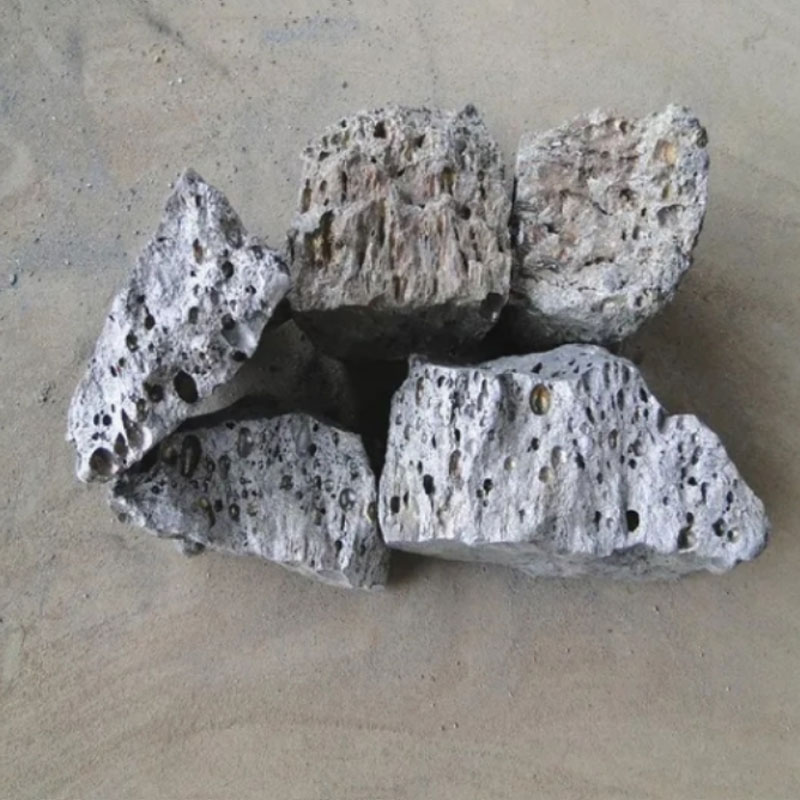
Not all ferro calcium is created equal. The Ca content, the Si content, the impurity levels (especially Al and C) – they all swing performance. A batch with inconsistent sizing will give you inconsistent yield. We had a supplier once whose material varied so much in lump size that our wire feed rates were all over the place. Switched to a producer with tighter physical and chemical specs, and our process control charts looked much healthier.
This is where a company’s infrastructure matters. A producer with a complete set of precision testing equipment, as noted in Xinxin Silicon’s description, isn’t just boasting. It means they can (or should be able to) provide certified analysis, lot-to-lot consistency, and traceability. For a steelmaker, that reliability is often more valuable than a marginally lower price per ton. A failed heat due to off-spec additives is a catastrophic cost.
The location of production matters too. Inner Mongolia is a hub for ferrosilicon and related alloys due to power and raw material access. Sourcing from there, from established players, often means a stable supply chain. But you still have to verify. A perfect management system on paper doesn’t guarantee perfect material on your shop floor. Always audit, always test incoming loads.
Wrap-Up: It’s a Process Tool, Not a Commodity
So, what’s ferro calcium used for? It’s a multifunctional process metallurgy tool. Its core use is in refining liquid steel and iron, but its value is entirely in the application details. It’s about inclusion engineering, process reliability, and final product performance.
Thinking of it as a simple additive is the biggest mistake. You need to understand your process parameters, your base chemistry, and your final product goals to select the right form and grade. Sometimes, a cheaper, lower-calcium alloy does the job. Other times, you need the high-purity, precisely packaged product.
In the end, it comes down to this: it’s a key that unlocks specific metallurgical outcomes. And like any key, it only works if you know which lock to use it on and how to turn it. The specs from a company like Inner Mongolia Xinxin Silicon Industry Co.,Ltd give you the raw key; the craft of the metallurgist or foundry engineer is in the turning.