+86-15134803151
- Chinese
- French
- German
- Portuguese
- Spanish
- Russian
- Japanese
- Korean
- Arabic
- Irish
- Greek
- Turkish
- Italian
- Danish
- Romanian
- Indonesian
- Czech
- Afrikaans
- Swedish
- Polish
- Basque
- Catalan
- Esperanto
- Hindi
- Lao
- Albanian
- Amharic
- Armenian
- Azerbaijani
- Belarusian
- Bengali
- Bosnian
- Bulgarian
- Cebuano
- Chichewa
- Corsican
- Croatian
- Dutch
- Estonian
- Filipino
- Finnish
- Frisian
- Galician
- Georgian
- Gujarati
- Haitian
- Hausa
- Hawaiian
- Hebrew
- Hmong
- Hungarian
- Icelandic
- Igbo
- Javanese
- Kannada
- Kazakh
- Khmer
- Kurdish
- Kyrgyz
- Latin
- Latvian
- Lithuanian
- Luxembou..
- Macedonian
- Malagasy
- Malay
- Malayalam
- Maltese
- Maori
- Marathi
- Mongolian
- Burmese
- Nepali
- Norwegian
- Pashto
- Persian
- Punjabi
- Serbian
- Sesotho
- Sinhala
- Slovak
- Slovenian
- Somali
- Samoan
- Scots Gaelic
- Shona
- Sindhi
- Sundanese
- Swahili
- Tajik
- Tamil
- Telugu
- Thai
- Ukrainian
- Urdu
- Uzbek
- Vietnamese
- Welsh
- Xhosa
- Yiddish
- Yoruba
- Zulu
- Kinyarwanda
- Tatar
- Oriya
- Turkmen
- Uyghur



Ferro Silicon and Calcium: Key Uses Benefits and Applications
2026-04-05
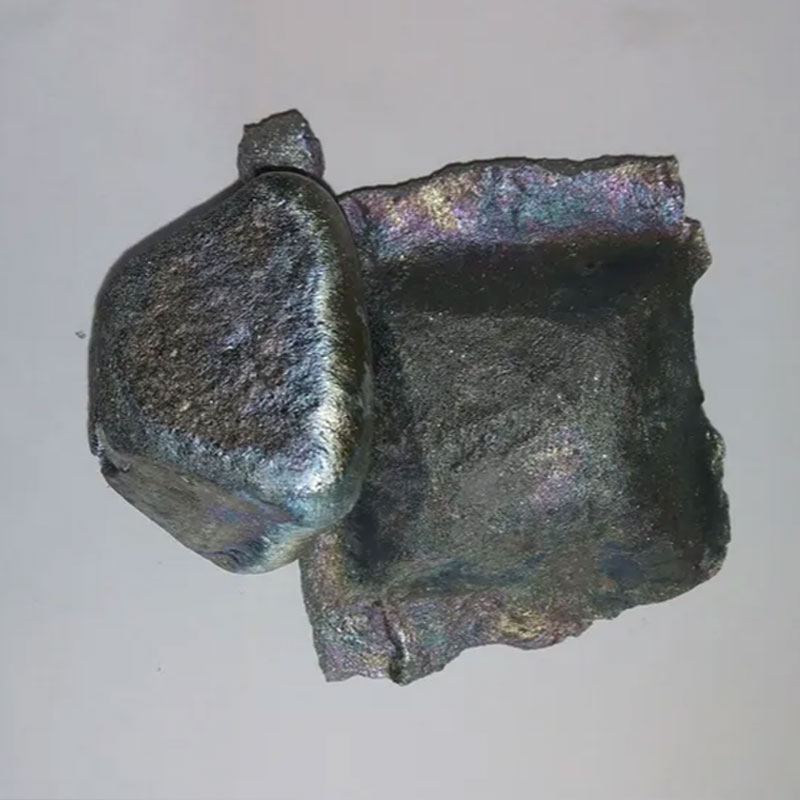
Ferro silicon and calcium—two elemental allies that rarely headline steelmaking news but quietly shape every ton of high-grade structural steel, ductile iron pipe, or automotive casting rolling off modern production lines. At Inner Mongolia Xinxin Silicon Industry Co., Ltd., we’ve supplied both for over 14 years—not as isolated commodities, but as precision-engineered partners in metallurgical control. Ferro silicon and calcium don’t just “deoxidize.” They orchestrate oxygen removal, nucleate graphite spheroids, suppress manganese sulfide stringers, and lock sulfur into stable, globular inclusions. That’s why customers in Shandong, Hebei, and Vietnam don’t ask *if* they need them—they ask *which ratio*, *what particle size*, and *how fast can you validate batch consistency?*
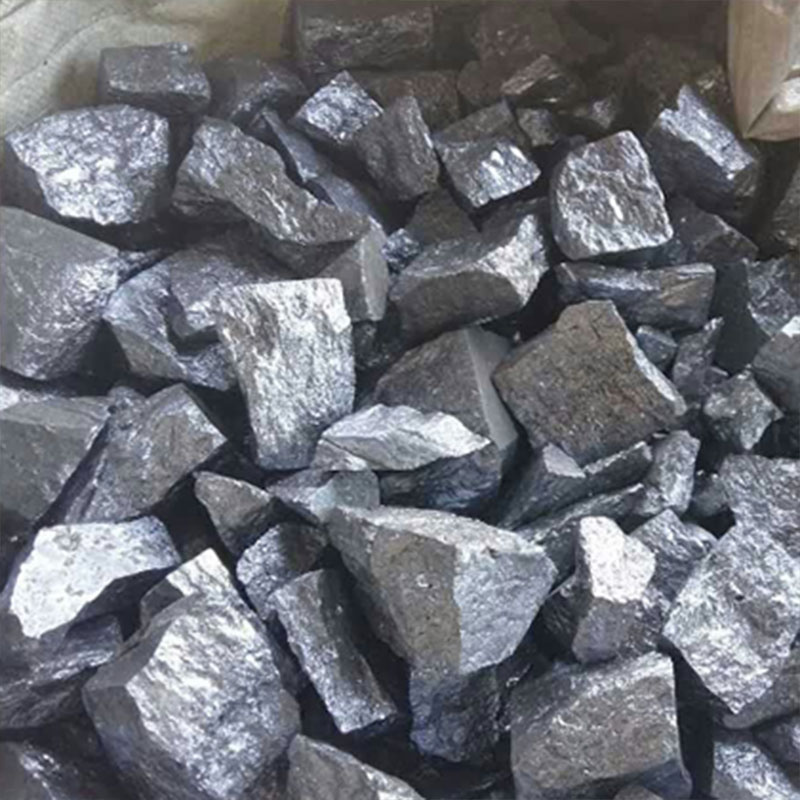
Why ferro silicon and calcium work better together than apart
Standalone ferrosilicon (FeSi) removes oxygen—but leaves behind residual sulfur and uneven inclusion morphology. Calcium alone vaporizes too fast in molten steel, offering poor recovery and inconsistent distribution. Combine them as calcium silicide (CaSi) or silicon-barium-calcium alloy—and you gain thermal stability, controlled release kinetics, and synergistic desulfurization. In our plant’s pilot ladle trials, CaSi added at 0.8–1.2 kg/ton reduced total oxygen from 32 ppm to 18 ppm *and* cut sulfur content by 37% versus FeSi-only treatments. The key? Calcium modifies alumina inclusions; silicon sustains the reducing atmosphere. Neither works optimally without the other.
We see this daily in customer feedback: A Tier-1 foundry in Tangshan switched from FeSi + CaAl wire to pre-alloyed Si-Ba-Ca after repeated nodularity failures in 40-mm ductile iron castings. Their yield jumped from 71% to 94% within two weeks. Why? Calcium silicide’s lower melting point (985°C vs. 1,260°C for pure Ca) lets it dissolve fully before slag skimming. Its silicon content buffers against reoxidation during tapping. That’s not theory—that’s 237 consecutive heats with nodularity >85% on ASTM A536 Grade 65-45-12.
Three real-world applications where ferro silicon and calcium make or break performance
- Ductile iron inoculation: Calcium silicide (typically 30–33% Ca, 58–62% Si) nucleates Type I graphite spheroids at 1,420–1,450°C. Too little Ca → flake graphite; too much → calcium oxide dross. Our standard CaSi-30 meets GB/T 20935.1–2018 and holds ±0.8% tolerance on Ca content—critical when inoculant dosage is 0.12% of melt weight.
- Secondary steel refining: In RH degassers, Si-Ba-Ca alloys outperform FeSi + CaF₂ blends. Barium lowers surface tension; calcium fixes sulfur; silicon prevents slag foaming. One customer reduced argon consumption by 22% after switching—because inclusion flotation accelerated without excessive slag volume.
- Cored wire feeding for thin-slab casters: Here, particle size matters more than composition. We mill CaSi to D50 = 0.85 mm—tight enough for stable wire feeding at 280 m/min, coarse enough to avoid dust explosion risk. Customers report 92% calcium recovery vs. 68% with sub-0.3-mm powders.
What buyers overlook—and pay for later
Some assume all ferro silicon and calcium products are interchangeable. They’re not. We’ve tested 17 imported CaSi batches from three continents: 4 failed sieve analysis (excess fines), 6 showed Ca segregation in cross-sections, and 3 contained >0.15% phosphorus—enough to embrittle low-carbon steels. Real-world consequence? A pipe mill in Jiangsu scrapped 112 tons of API 5L X65 after hydrogen-induced cracking—traced to phosphorus-rich CaSi that slipped past their incoming QC.
That’s why our quality assurance isn’t paperwork—it’s physics. Every lot undergoes OES analysis (Spectro MAXx), laser diffraction sizing (Malvern Mastersizer 3000), and hot-stage microscopy to verify dissolution behavior at 1,480°C. We log every test result—not just pass/fail. If your application demands <0.02% Al or <0.005% S, we’ll share the raw spectra file. No marketing gloss. Just data you can feed into your Melt Shop MES.
Choosing the right product starts with your furnace—not our catalog
Ask yourself three questions before ordering:
- What’s your ladle temperature profile? Below 1,400°C? Choose CaSi-28 (lower melting point). Above 1,480°C? Go CaSi-33 for slower dissolution and deeper penetration.
- What’s your sulfur target? >0.020%? Prioritize Si-Ba-Ca (Ba enhances sulfide capacity). <0.008%? Use CaSi + MgFe cored wire for final polishing.
- How tight is your delivery window? Our standard lead time is 7 days FOB Tianjin. For emergency orders under 48 hours, we hold 120 MT of CaSi-30 in bonded warehouse stock—pre-tested, pre-packaged, ready for container loading.
Ferro silicon and calcium aren’t additives. They’re metallurgical levers—precise, irreversible, and non-negotiable in high-integrity applications. At Inner Mongolia Xinxin Silicon Industry Co., Ltd., we treat them that way: no stock formulas, no generic specs, no assumptions. Just alloys calibrated to your chemistry, your equipment, and your scrap mix. Because when your next heat hits 1,430°C, what matters isn’t the label on the bag—it’s whether the calcium dissolves *before* the slag forms, and whether the silicon stays active *after* the argon stops bubbling.