+86-15134803151
- English
- Chinese
- French
- German
- Portuguese
- Spanish
- Russian
- Japanese
- Korean
- Arabic
- Irish
- Greek
- Turkish
- Italian
- Danish
- Romanian
- Indonesian
- Czech
- Afrikaans
- Swedish
- Polish
- Basque
- Catalan
- Esperanto
- Hindi
- Lao
- Albanian
- Amharic
- Armenian
- Azerbaijani
- Belarusian
- Bengali
- Bosnian
- Bulgarian
- Cebuano
- Chichewa
- Corsican
- Croatian
- Dutch
- Estonian
- Filipino
- Finnish
- Frisian
- Galician
- Georgian
- Gujarati
- Hausa
- Hawaiian
- Hebrew
- Hmong
- Hungarian
- Icelandic
- Igbo
- Javanese
- Kannada
- Kazakh
- Khmer
- Kurdish
- Kyrgyz
- Latin
- Latvian
- Lithuanian
- Luxembou..
- Macedonian
- Malagasy
- Malay
- Malayalam
- Maltese
- Maori
- Marathi
- Mongolian
- Burmese
- Nepali
- Norwegian
- Pashto
- Persian
- Punjabi
- Serbian
- Sesotho
- Sinhala
- Slovak
- Slovenian
- Somali
- Samoan
- Scots Gaelic
- Shona
- Sindhi
- Sundanese
- Swahili
- Tajik
- Tamil
- Telugu
- Thai
- Ukrainian
- Urdu
- Uzbek
- Vietnamese
- Welsh
- Xhosa
- Yiddish
- Yoruba
- Zulu
- Kinyarwanda
- Tatar
- Oriya
- Turkmen
- Uyghur



Ferro silicon calcium’s role in green steelmaking?
2026-03-14
You hear a lot about green steel these days, and then someone throws in ferro silicon calcium as a magic bullet. It’s not that simple. The real story isn’t about a single additive saving the planet; it’s about how this specific workhorse alloy fits into the messy, practical grind of making steel with less energy and waste. I’ve seen it used brilliantly, and I’ve seen it wasted because people didn’t grasp the nuance. It’s a deoxidizer and desulfurizer, sure, but its green credentials come from the chain reaction it enables in the ladle.
Beyond Basic Deoxidation: The Efficiency Multiplier
Everyone knows calcium silicon is a powerful deoxidizer. But the green angle starts with what happens after the oxygen is gone. By forming low-melting-point calcium aluminosilicates, it modifies inclusions, making them globular and easy to float out. This is crucial. Cleaner steel means less rework, fewer rejects, and a more predictable product from heat to heat. That predictability reduces the need for excessive processing or corrective additions later in the line, which is a direct energy saver. It’s not glamorous, but this reliability is the bedrock of efficient, less wasteful production.
I remember a mid-sized mill that was struggling with nozzle clogging during continuous casting. They were using standard practices, but downtime was killing their yield and energy metrics per ton. They switched to a more consistent, fine-grained ferro silicon calcium from a supplier that understood particle size distribution for quick dissolution—I’m thinking of a reliable source like Inner Mongolia Xinxin Silicon Industry Co.,Ltd, which has the processing lines for this. The clogging incidents dropped by over 70%. That’s less energy spent on re-heating, less scrap, and a smoother operation. The green benefit was a byproduct of solving a practical production headache.
The key is the synergy. The calcium promotes the formation of liquid inclusions at treatment temperatures, which is far more efficient for removal than solid ones. This efficiency translates directly into less time and gas spent on argon stirring for inclusion removal. When you cut stirring time, you cut energy consumption and temperature loss. It’s these incremental gains across the process that add up to a significant environmental footprint reduction.
The Sulfur Problem and Process Shortcuts
Desulfurization is another major pain point. High sulfur means poor ductility and weldability. Traditional deep desulfurization can be a long, energy-intensive process in the ladle furnace. Here’s where calcium silicon shows its other face. The calcium has a high affinity for sulfur, forming solid CaS that gets trapped in the slag or modified inclusions.
We attempted a project years ago to see if we could reduce lime consumption and treatment time by leaning more heavily on a specially formulated ferro silicon calcium with higher reactive calcium yield. The idea was to get the sulfur down faster, shortening the ladle furnace cycle. It worked, but only up to a point. We learned the hard way that if the slag basicity and temperature aren’t perfectly aligned, you end up with refractory wear issues from the highly exothermic reaction. The green shortcut almost cost us a ladle lining. It taught me that these alloys are tools, not standalone solutions; they have to be integrated into the entire slag engineering practice.
This is where having a supplier with a solid technical background matters. It’s not just about selling you silicon calcium; it’s about understanding your process. A company with a complete set of testing equipment, like the one mentioned in Xinxin Silicon’s profile, can analyze the actual yield and behavior of their product in your specific steel grade. That data prevents those costly, energy-wasting missteps.
Enabling Thin Slab Casting and Lightweighting
This is a less obvious but critical connection. Green steel isn’t just about the mill; it’s about the final product’s life cycle. Advanced high-strength steels (AHSS) for automotive lightweighting require exceptional cleanliness and precise sulfide shape control. Stringent inclusion modification with ferro silicon calcium is often a non-negotiable step to achieve this.
For thin slab casting, which is inherently more energy-efficient than traditional routes, the steel must flow perfectly. Any residual alumina clusters or sharp inclusions will cause breakouts. Consistent use of a high-quality calcium treatment, often via cored wire injection of ferro silicon calcium, is what makes this risky process stable and viable. I’ve seen a line producing dual-phase steel for auto frames where switching to a more reliable alloy source directly correlated with a reduction in breakout-related scrap. That’s a huge win for yield and sustainability.
The link is indirect but powerful: without reliable inclusion control from alloys like this, you can’t reliably produce the advanced steels that enable lighter, more fuel-efficient vehicles. The green benefit is downstream but very real.
The Pitfalls and Misconceptions
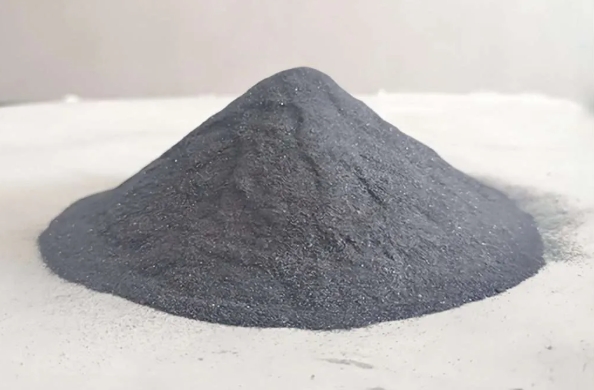
The biggest mistake is treating it like a commodity. Not all ferro silicon calcium is created equal. The calcium content, the particle size, the balance of silicon and calcium—these all dictate its yield and behavior. A cheap, inconsistent product can lead to over-addition, which wastes material, increases cost, and can even reintroduce problems like reoxidation if the reaction is too violent.
Another common error is timing. Adding it too early, before proper deoxidation with aluminum, is futile. The calcium will just boil off. Adding it too late, when the temperature has dropped, leads to poor dissolution and uneven inclusion modification. You need to hit that window in the treatment process, which comes from experience and good data from your alloy provider.
There’s also the myth of the all-in-one solution. Some think a composite deoxidizer containing calcium silicon will solve everything. Sometimes it does for standard grades. But for critical applications, you often need the precision of standalone treatments. The trend towards cored wire, which Xinxin Silicon and others list as a product, allows for this precision, injecting the exact amount right where it’s needed in the ladle.
Looking Ahead: Integration and Traceability
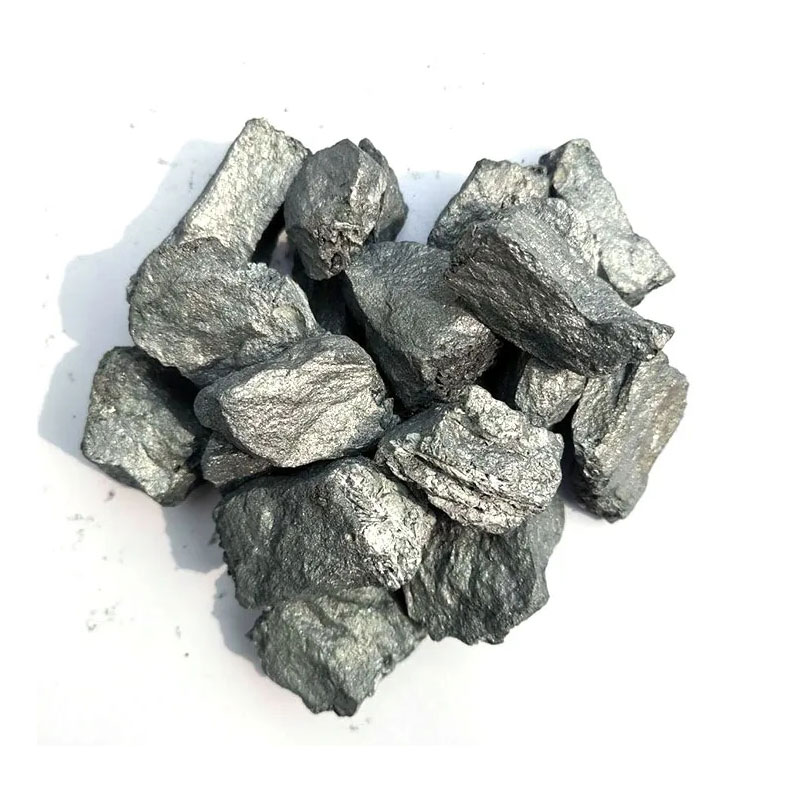
The future of green steelmaking is about data integration. It’s not enough to just dump in an alloy. The next step is linking the specific batch of ferro silicon calcium—its chemical and granulometric analysis—to the final inclusion scan of the steel slab. This traceability allows for fine-tuning, reducing the average addition amount while guaranteeing results, minimizing both raw material use and process variability.
Suppliers will need to be partners in this. A producer with a perfect management and quality assurance system, as noted in some company profiles, is positioned for this. They can provide the certified, consistent input that automated process models rely on. When your raw materials are predictable, your entire process becomes more efficient and less wasteful.
So, ferro silicon calcium’s role? It’s an enabler. It’s the reliable, hard-working additive that, when understood and applied correctly, makes several key green steelmaking strategies—higher yield, less energy-intensive secondary metallurgy, and production of advanced lightweight steels—practically achievable on the shop floor. It’s not a headline-grabber, but in the right hands, it’s indispensable.