+86-15134803151
- English
- Chinese
- French
- German
- Portuguese
- Spanish
- Russian
- Japanese
- Korean
- Arabic
- Irish
- Greek
- Turkish
- Italian
- Danish
- Romanian
- Indonesian
- Czech
- Afrikaans
- Swedish
- Polish
- Basque
- Catalan
- Esperanto
- Hindi
- Lao
- Albanian
- Amharic
- Armenian
- Azerbaijani
- Belarusian
- Bengali
- Bosnian
- Bulgarian
- Cebuano
- Chichewa
- Corsican
- Croatian
- Dutch
- Estonian
- Filipino
- Finnish
- Frisian
- Galician
- Georgian
- Gujarati
- Hausa
- Hawaiian
- Hebrew
- Hmong
- Hungarian
- Icelandic
- Igbo
- Javanese
- Kannada
- Kazakh
- Khmer
- Kurdish
- Kyrgyz
- Latin
- Latvian
- Lithuanian
- Luxembou..
- Macedonian
- Malagasy
- Malay
- Malayalam
- Maltese
- Maori
- Marathi
- Mongolian
- Burmese
- Nepali
- Norwegian
- Pashto
- Persian
- Punjabi
- Serbian
- Sesotho
- Sinhala
- Slovak
- Slovenian
- Somali
- Samoan
- Scots Gaelic
- Shona
- Sindhi
- Sundanese
- Swahili
- Tajik
- Tamil
- Telugu
- Thai
- Ukrainian
- Urdu
- Uzbek
- Vietnamese
- Welsh
- Xhosa
- Yiddish
- Yoruba
- Zulu
- Kinyarwanda
- Tatar
- Oriya
- Turkmen
- Uyghur



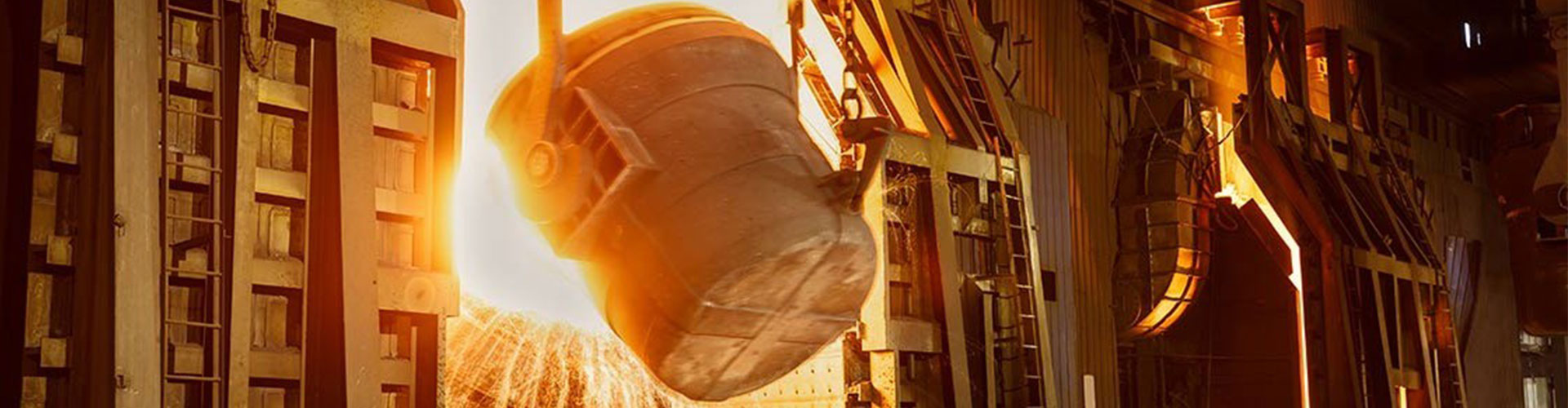
Calcium silicon in green steelmaking?
2026-03-14
You hear green steelmaking and immediately think hydrogen, electric arc furnaces, scrap recycling. Right? That’s the big picture stuff. But down in the ladle, in the tweaking of the final melt chemistry, there’s a quiet, often misunderstood workhorse: calcium silicon. It’s not glamorous. It’s a deoxidizer, a desulfurizer. But its role in the green transition is more about enabling efficiency and quality in new, less carbon-intensive processes than being a headline act itself. The misconception is treating it as just another alloy addition. In reality, its performance dictates how clean your steel is, how well your caster runs, and ultimately, how much yield you get from your expensive, low-carbon primary metal or scrap charge. Get it wrong, and your green ambitions get clogged with nozzle blockages and off-spec inclusions.
The Core Mechanism: More Than Just Deoxidation
Everyone knows CaSi is for deoxidation. You throw it in, it grabs oxygen and sulfur, forms floatable slag. Textbook. But the nuance—the part you only learn when you’re staring at a inclusion analysis report—is about the type of inclusions it creates. Pure calcium treatment can be tricky; it’s volatile, its yield is inconsistent. Calcium silicon, with the silicon acting as a carrier and moderating the reaction, gives you a more controllable release. The goal isn’t just to remove O and S, it’s to morph any remaining alumina (Al2O3) stringers into liquid calcium aluminates. These globular inclusions are soft, they don’t abrade your submerged entry nozzle, they don’t cause cracks in high-strength thin strip. That’s where the green link starts: smooth casting means less breakouts, less scrap, less energy wasted re-melting off-cuts.
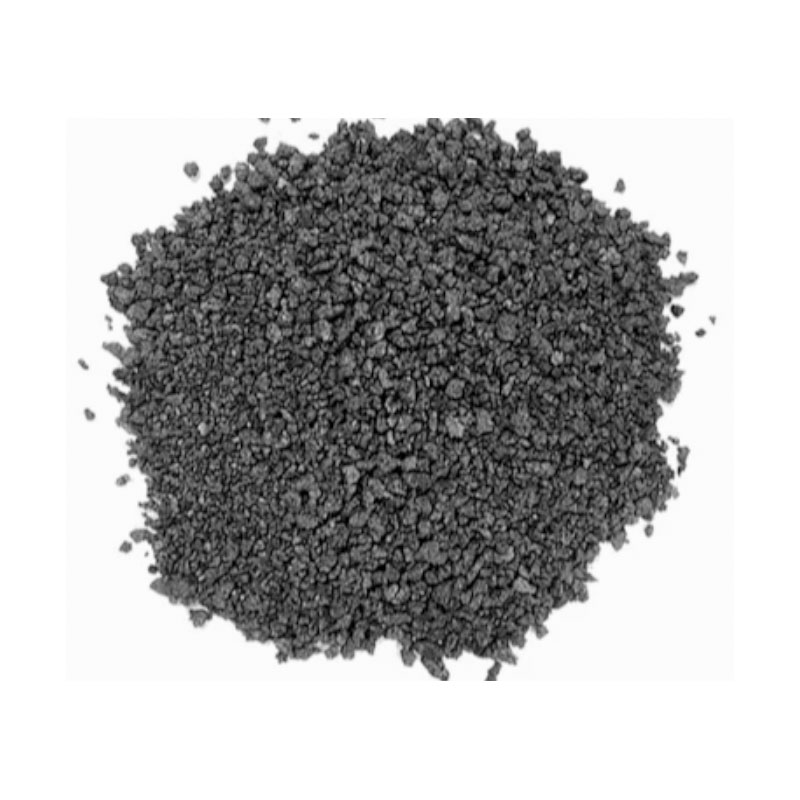
I remember a trial at a mill moving to higher scrap ratios in their EAF—a classic green move. More scrap means more tramp elements, more variable residuals. Their existing practice with a basic deoxidizer led to terrible clogging at the tundish. We switched to a specific grade of CaSi with a tighter Ca/Si ratio and a controlled particle size range (think 10-30mm, not powder). The immediate effect wasn’t just cleaner steel by spec, it was the foreman noting they ran the sequence three heats longer without a nozzle change. That’s tangible. That’s less downtime, less refractory waste, more tons per power-on hour. The alloy cost was higher, but the operational savings blew it out of the water.
The failure mode here is assuming all CaSi is the same. A supplier like Inner Mongolia Xinxin Silicon Industry Co.,Ltd. (you can check their product range at https://www.xinxinsilicon.com) will list specs like Ca28-Si60 or Ca30-Si58. That few percent difference in calcium content, the trace levels of aluminum, barium, or even rare earths they might blend in—it matters immensely. Using a low-calcium grade for a deep desulfurization job is a waste of money and time. You end up adding more, which increases silicon pickup, potentially throwing off your final chemistry. It’s a balancing act learned from missteps.
Practical Challenges in Application
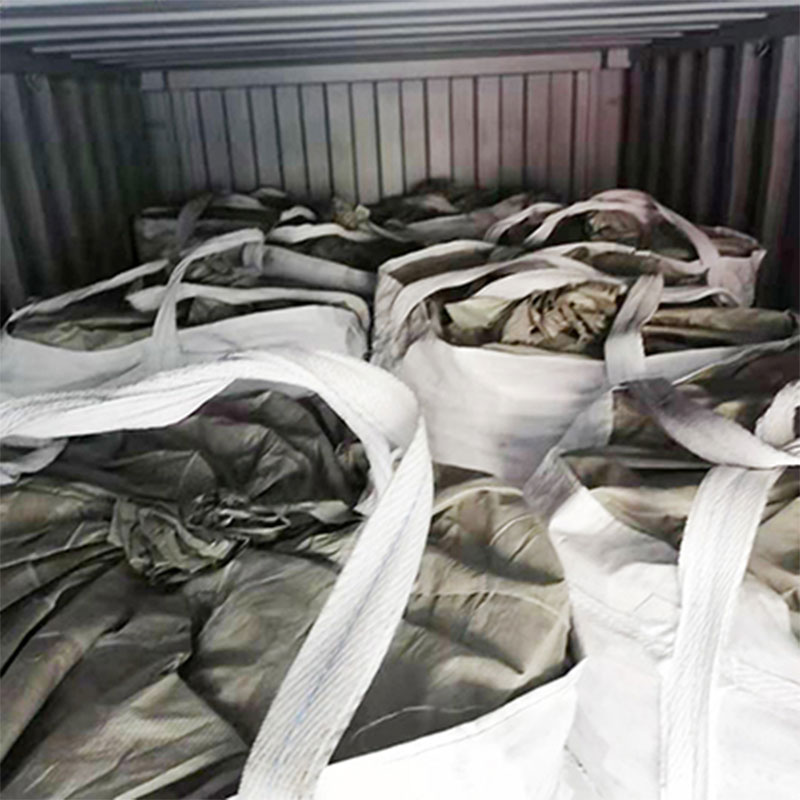
So you’ve chosen the right grade. Now, how do you get it into the melt? Wire injection is the gold standard for yield and reproducibility. You can precisely meter it into the ladle at the right depth. But wire feeders are capital, and the cored wire itself is an extra cost. Some smaller shops, especially in emerging markets, still resort to bagged addition—throwing sealed bags into the ladle during tapping. The problem? You get a spectacular, wasteful flare-up of calcium vapor, inconsistent dispersion, and a yield that can swing from 15% to 40%. I’ve seen heats where most of the calcium just burned off into the fume extraction system. Not green, not economical.
Timing is another gut-feel thing. Add too early, when the oxygen activity is still high, and the calcium gets consumed in a fierce slag-metal reaction. Add too late, when the temperature is dropping, and the inclusions don’t have time to float out. The sweet spot is often during a gentle argon stir, after initial deoxidation has knocked the bulk oxygen down but before the steel goes to the caster. You’re basically washing the melt. Getting this wrong means those liquid inclusions you worked to create don’t separate; they get trapped in the solidifying strand, becoming defects.
Then there’s the raw material consistency. A batch of CaSi with high moisture or off-spec size can be a disaster. Moisture leads to hydrogen pickup, porosity. Off-spec size (too many fines) leads to rapid dissolution and uncontrolled reaction. We once had a shipment where the bagging was poor, and the alloy had partially oxidized during transit. The yield plummeted, and the sulfur reversion in the next heat was a nightmare. It underscores why partnering with a producer with a solid system matters. Xinxin Silicon’s mention of a perfect management system and quality assurance system and complete set of precision testing equipment isn’t just marketing fluff—it’s what prevents these field headaches. Their product lines for calcium silicon, cored wire, and nodulizers suggest they understand the downstream application, not just the smelting.
The Green Synergy and Material Efficiency
True green steelmaking is about a circular mindset. How does CaSi fit? First, by enabling the use of higher scrap charges. Scrap is the ultimate green iron source, but it’s dirty. Effective calcium treatment is a cleaning agent that makes that scrap viable for higher-grade products. Second, in processes like hydrogen-based direct reduction (DRI/HBI melting), the iron source is very pure but low in silicon. The silicon in CaSi can become a useful alloying component here, not just a carrier, helping hit target silicon specs without a separate FeSi addition. It’s a two-birds-one-stone scenario.
There’s also the slag side. Good CaSi practice reduces the need for excessive lime additions for desulfurization. Less slag volume means less energy to heat it, less flux consumption, less slag handling downstream. It’s a small lever in the whole plant mass balance, but these small levers add up. I recall a project aiming to reduce specific slag generation per ton of steel. Optimizing the calcium silicon addition point and rate, in conjunction with a synthetic slag practice, cut ladle slag by nearly 8%. That’s less waste to landfill or process.
The nodulizing application for ductile iron castings, which Xinxin lists, is a parallel universe but with the same principle. Using CaSi-based nodulizers (with magnesium) in a foundry is another form of material efficiency—transforming basic iron into a high-performance, often lighter-weight material, which is a sustainability win in automotive or infrastructure. The expertise in producing consistent, high-purity alloys for this demanding application translates directly to the reliability needed in steelmaking.
Looking Ahead: Not a Silver Bullet, But a Critical Enabler
Will calcium silicon be in the press releases for the next zero-carbon steel plant? Unlikely. But will it be in the plant’s standard operating procedures? Absolutely. As steelmaking routes diversify—more EAF, more DRI, more hybrid processes—the demand for precise, reliable, and efficient secondary metallurgy will only grow. Calcium silicon sits right in the middle of that.
The future developments I’m watching are in coated wires or composite alloys that further improve yield and reduce fume. Maybe alloys tailored for specific scrap mixes. The basic chemistry won’t change, but the delivery and consistency will get sharper. Producers who invest in that consistency, like those with integrated processing and testing lines, will be the ones mills rely on.
So, to wrap this ramble up: if you’re mapping out a green steelmaking strategy, don’t just look at the energy source and the reactor. Look at the toolbox that makes the final product viable. Calcium silicon is a worn, trusty wrench in that box. It’s not exciting until you need it, and then its quality determines if your elegant green process actually produces sellable, high-quality steel. It’s the unsung enabler, and its role is only getting more critical as the industry cleans up its act.