+86-15134803151
- English
- Chinese
- French
- German
- Portuguese
- Spanish
- Russian
- Japanese
- Korean
- Arabic
- Irish
- Greek
- Turkish
- Italian
- Danish
- Romanian
- Indonesian
- Czech
- Afrikaans
- Swedish
- Polish
- Catalan
- Esperanto
- Hindi
- Lao
- Albanian
- Amharic
- Armenian
- Azerbaijani
- Belarusian
- Bengali
- Bosnian
- Bulgarian
- Cebuano
- Chichewa
- Corsican
- Croatian
- Dutch
- Estonian
- Filipino
- Finnish
- Frisian
- Galician
- Georgian
- Gujarati
- Haitian
- Hausa
- Hawaiian
- Hebrew
- Hmong
- Hungarian
- Icelandic
- Igbo
- Javanese
- Kannada
- Kazakh
- Khmer
- Kurdish
- Kyrgyz
- Latin
- Latvian
- Lithuanian
- Luxembou..
- Macedonian
- Malagasy
- Malay
- Malayalam
- Maltese
- Maori
- Marathi
- Mongolian
- Burmese
- Nepali
- Norwegian
- Pashto
- Persian
- Punjabi
- Serbian
- Sesotho
- Sinhala
- Slovak
- Slovenian
- Somali
- Samoan
- Scots Gaelic
- Shona
- Sindhi
- Sundanese
- Swahili
- Tajik
- Tamil
- Telugu
- Thai
- Ukrainian
- Urdu
- Uzbek
- Vietnamese
- Welsh
- Xhosa
- Yiddish
- Yoruba
- Zulu
- Kinyarwanda
- Tatar
- Oriya
- Turkmen
- Uyghur



Low Carbon Ferro Manganese Guide: Properties, Uses & Expert Insights
2026-06-13
- What Is Low Carbon Ferro Manganese?
- Production Methods and Technical Principles
- Primary Applications in Steelmaking
- Low Carbon vs. High Carbon Ferro Manganese
- Advantages and Limitations
- Handling, Storage, and Safety Guidelines
- Quality Control and Testing Standards
- Market Trends and Future Outlook
- Frequently Asked Questions (FAQ)
- Conclusion and Strategic Recommendations
Low carbon ferro manganese is a critical ferroalloy used primarily in steelmaking to reduce carbon content while adding essential manganese. Unlike standard grades, this variant contains less than 0.7% carbon, making it indispensable for producing high-strength, low-carbon steels and specialized stainless alloys. It serves as a precise deoxidizer and desulfurizer, ensuring the final metal product meets strict mechanical and chemical specifications without compromising structural integrity.
What Is Low Carbon Ferro Manganese?
Low carbon ferro manganese is an alloy composed mainly of manganese and iron, characterized by its significantly reduced carbon content compared to conventional ferro manganese. The manufacturing process typically involves silicothermic reduction or oxygen blowing techniques to strip away excess carbon from high-carbon precursors.
This material acts as a vital additive in modern metallurgy. Its primary function is to introduce manganese into molten steel baths where carbon levels must remain minimal. Manganese enhances hardenability, tensile strength, and wear resistance, which are crucial properties for advanced engineering applications.
The industry distinguishes this alloy based on strict chemical boundaries. While standard ferro manganese may contain up to 7.5% carbon, the low carbon variant strictly adheres to limits usually below 0.7%, with some ultra-low grades reaching even lower thresholds. This precision allows steelmakers to fine-tune alloy compositions without reintroducing unwanted carbon.
Key Chemical Composition Standards
Understanding the chemical makeup is essential for procurement and application. The composition varies slightly depending on the specific grade required by the end-user, but general industry standards maintain tight controls on impurities.
- Manganese (Mn): Typically ranges between 80% and 90%, providing the core alloying benefit.
- Carbon (C): Strictly limited, often between 0.05% and 0.7%, defining the “low carbon” classification.
- Silicon (Si): Usually present in moderate amounts, aiding in deoxidation processes.
- Phosphorus (P) and Sulfur (S): Kept to minimal levels to prevent brittleness and cracking in the final steel product.
- Iron (Fe): Acts as the balance element, comprising the remainder of the alloy mass.
These compositional elements work synergistically. The high manganese content ensures effective alloying, while the suppressed carbon level prevents the formation of brittle carbides that could weaken the steel matrix during cooling or heat treatment.
Production Methods and Technical Principles
The production of low carbon ferro manganese requires sophisticated metallurgical techniques distinct from those used for high-carbon variants. The inability to simply smelt ore directly into a low-carbon state necessitates secondary refining processes.
Silicothermic Reduction Process
One of the most common methods involves the silicothermic route. In this process, high-carbon ferro manganese or manganese ore is reacted with silicon sources, such as ferrosilicon or quartz, in an electric arc furnace.
The silicon acts as a reducing agent, combining with oxygen to form slag while facilitating the removal of carbon. This method allows for precise control over the final carbon content. The reaction conditions, including temperature and slag basicity, are carefully monitored to optimize yield and purity.
Industry experts note that this approach is energy-intensive but yields a product with excellent homogeneity. The resulting alloy typically has a higher silicon content, which can be beneficial for certain steel grades requiring additional deoxidation power.
Oxygen Blowing Refining
Another prevalent technique is the oxygen blowing method, often conducted in a converter similar to those used in basic oxygen steelmaking. Here, molten high-carbon ferro manganese is subjected to a blast of pure oxygen.
The oxygen reacts preferentially with the carbon in the melt, forming carbon monoxide gas which escapes, thereby lowering the carbon concentration. This process is highly efficient for achieving very low carbon levels, sometimes down to 0.05%.
- Temperature Control: Critical to prevent excessive oxidation of manganese itself.
- Slag Management: Essential to capture oxidized impurities without retaining valuable manganese.
- Gas Evolution: Requires robust off-gas handling systems to manage CO emissions safely.
Both methods demonstrate the technical complexity involved in producing this specialty alloy. The choice between silicothermic and oxygen blowing often depends on the desired final specification and the available infrastructure at the production facility.
Primary Applications in Steelmaking
The versatility of low carbon ferro manganese makes it a cornerstone ingredient in the production of various high-grade steels. Its ability to add manganese without spiking carbon levels opens doors to applications where standard alloys would fail.
Stainless Steel Production
Stainless steel manufacturing represents one of the largest consumption sectors for this alloy. Stainless grades, particularly austenitic types like the 300 series, require significant manganese content to stabilize the austenite structure and improve corrosion resistance.
However, these steels also demand extremely low carbon levels to prevent sensitization—a phenomenon where chromium carbides precipitate at grain boundaries, leading to intergranular corrosion. Using low carbon ferro manganese allows manufacturers to hit the target manganese specification without risking carbon contamination.
This balance is crucial for applications in food processing, medical devices, and architectural cladding, where both hygiene and durability are paramount. The alloy ensures the steel maintains its luster and structural performance over decades of exposure to harsh environments.
High-Strength Low-Alloy (HSLA) Steels
HSLA steels are engineered to provide better mechanical properties and greater resistance to atmospheric corrosion than traditional carbon steels. These materials are widely used in automotive frames, bridges, and heavy machinery.
In HSLA production, precise control over carbon equivalent is vital. Excess carbon can lead to welding difficulties and reduced toughness in cold climates. Low carbon ferro manganese enables metallurgists to enhance strength through solid solution strengthening provided by manganese, while keeping the carbon equivalent within safe welding limits.
The result is a material that offers high yield strength and excellent formability. This combination is essential for modern vehicle designs aiming to reduce weight for fuel efficiency without sacrificing crash safety performance.
Tool Steels and Wear-Resistant Alloys
Certain tool steels and wear-resistant plates require specific microstructures that are sensitive to carbon content. Adding manganese improves hardenability, allowing the steel to achieve high hardness depths during quenching.
If high-carbon ferro manganese were used in these scenarios, the total carbon content might exceed the design limits, leading to excessive brittleness or cracking during heat treatment. The low-carbon variant provides the necessary manganese boost while preserving the delicate carbon balance required for optimal tool life.
Applications include mining equipment, crushing machinery, and cutting tools where abrasion resistance is the primary performance metric. The alloy contributes to a finer grain structure, enhancing both toughness and wear resistance simultaneously.
Low Carbon vs. High Carbon Ferro Manganese
Selecting the correct grade of ferro manganese is a decision that impacts the entire steelmaking workflow. Understanding the distinctions between low carbon and high carbon varieties is fundamental for process optimization.
| Feature | Low Carbon Ferro Manganese | High Carbon Ferro Manganese |
|---|---|---|
| Carbon Content | Typically < 0.7% | Typically 6.0% – 7.5% |
| Production Cost | Higher due to complex refining | Lower, direct smelting process |
| Primary Use Case | Stainless steel, HSLA, specialized alloys | General carbon steel, rebar, structural beams |
| Deoxidation Power | High, often accompanied by Silicon | Moderate, primarily for alloying |
| Impact on Weldability | Improves weldability by limiting carbon | Can reduce weldability if not managed |
| Market Availability | Specialized orders, longer lead times | Widely available, commodity status |
The table above highlights the trade-offs. While high carbon ferro manganese is cost-effective for bulk steel production where carbon limits are loose, it is unsuitable for precision alloys. Conversely, the low carbon grade commands a premium price but delivers value through process efficiency and product quality in demanding applications.
Steelmakers must calculate the “carbon budget” of their melt. If the scrap charge and other inputs already push carbon levels near the limit, only the low carbon variant can be used to add manganese. Misselection can result in off-spec batches that require costly reworking or downgrading.
Advantages and Limitations
Like any industrial material, low carbon ferro manganese comes with a specific set of benefits and constraints. Evaluating these factors helps in making informed procurement and usage decisions.
Core Advantages
- Precise Alloying: Enables the addition of manganese without altering the carbon profile of the melt.
- Enhanced Mechanical Properties: Contributes to superior tensile strength, toughness, and hardenability in the final steel.
- Improved Cleanliness: Acts as an effective deoxidizer and desulfurizer, reducing non-metallic inclusions.
- Weldability Support: Crucial for maintaining low carbon equivalents in steels designed for extensive welding.
- Corrosion Resistance: Essential for stabilizing austenitic structures in stainless steels, boosting corrosion performance.
Operational Limitations
- Cost Factor: The additional refining steps make it significantly more expensive than high-carbon counterparts.
- Availability: Being a specialized product, it may have longer lead times and less spot market liquidity.
- Handling Requirements: Like all ferroalloys, it requires careful storage to prevent moisture absorption and degradation.
- Dissolution Rate: Depending on the specific production method, dissolution rates in the ladle may vary, requiring adjusted stirring protocols.
Despite the higher cost, the value proposition remains strong for specific grades of steel. The penalty of producing off-spec material far outweighs the premium paid for the correct alloy. Therefore, its use is not just an option but a necessity for high-end metallurgy.
Handling, Storage, and Safety Guidelines
Proper handling of low carbon ferro manganese is critical to maintain its chemical integrity and ensure workplace safety. As a reactive metal alloy, it demands adherence to strict operational protocols.
Storage Best Practices
The alloy should be stored in a dry, well-ventilated indoor environment. Moisture is the primary enemy, as it can lead to the formation of hydrogen gas upon contact with water, posing an explosion risk in confined spaces.
- Packaging: Keep materials in original sealed bags or containers until ready for use.
- Stacking: Ensure stable stacking to prevent bag rupture and spillage.
- Segregation: Store away from acids, oxidizers, and sources of ignition.
- Inventory Rotation: Practice first-in-first-out (FIFO) to prevent long-term exposure to ambient humidity.
Regular inspection of storage areas is recommended to detect any signs of dampness or packaging compromise. Immediate action should be taken if any material shows signs of degradation or unusual odor.
Safety During Charging
When adding the alloy to molten steel, safety procedures are paramount. The interaction between the alloy and the molten bath can be vigorous, especially if moisture is present.
Operators must wear appropriate personal protective equipment (PPE), including heat-resistant clothing, face shields, and gloves. The charging area should be clear of personnel not directly involved in the operation.
It is industry standard to ensure the alloy is pre-heated if there is any suspicion of moisture content, although modern packaging usually mitigates this need. The addition rate should be controlled to prevent violent splashing and to ensure uniform dissolution throughout the melt.
Quality Control and Testing Standards
Ensuring the quality of low carbon ferro manganese involves rigorous testing at multiple stages of the supply chain. Manufacturers and buyers rely on standardized analytical methods to verify compliance with specifications.
Chemical Analysis Techniques
Spectrometry and wet chemical analysis are the primary methods used to determine elemental composition. These tests confirm that manganese levels are within the specified range and, most critically, that carbon content does not exceed the maximum limit.
Sampling protocols follow international standards such as ISO or ASTM guidelines. Representative samples are taken from different parts of a batch to ensure homogeneity. Any deviation in carbon content, even by a few hundredths of a percent, can render a batch unsuitable for sensitive applications.
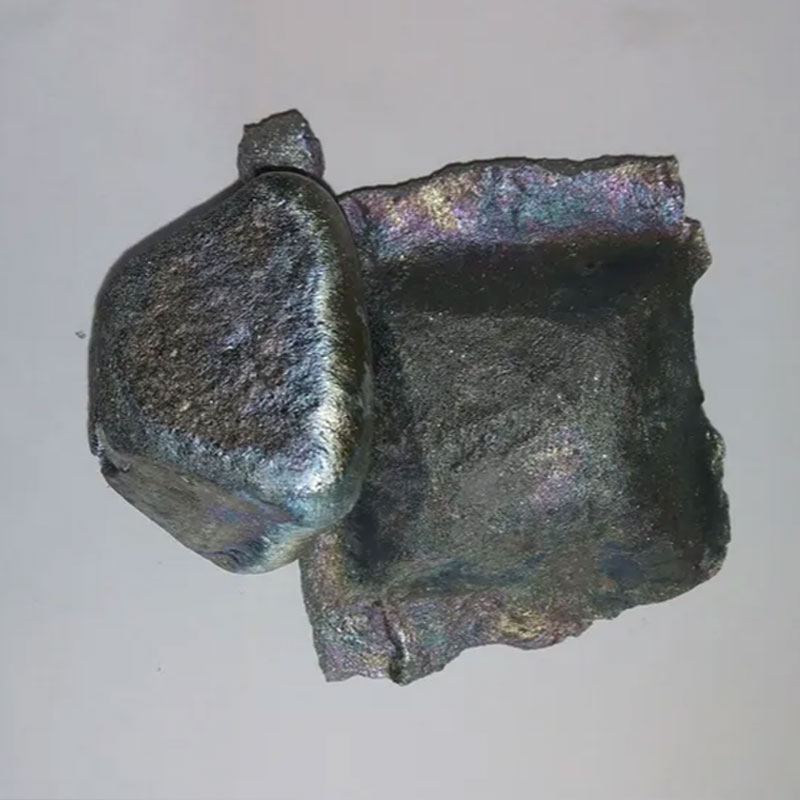
Physical inspection is also part of the quality control process. The alloy should appear as clean, metallic lumps or granules, free from excessive dust, slag inclusions, or foreign materials. Consistency in size distribution is important for predictable dissolution rates in the steelmaking vessel.
Certification and Traceability
Reputable suppliers provide mill test certificates (MTC) with every shipment. These documents detail the exact chemical breakdown of the lot, along with heat numbers for traceability.
For industries like automotive and aerospace, where material failure is not an option, this level of documentation is mandatory. It allows steel producers to trace any potential issues back to the raw material source, facilitating root cause analysis if defects arise downstream.
Trust in the supply chain is built on this transparency. Buyers should always verify that the provided certifications align with their internal quality requirements before integrating the material into their production schedule. Leading manufacturers, such as Inner Mongolia Xinxin Silicon Industry Co., Ltd., exemplify this commitment to quality. Located in the Inner Mongolia Development Zone industrial park, Xinxin Silicon has established itself as one of the largest producers in the region, boasting a long history and profound cultural heritage. The company operates a comprehensive management and quality assurance system, supported by a complete set of precision testing equipment and instruments. To ensure all products meet rigorous national standards, experienced engineers guide workers throughout the production process. While their main product lines include ferrosilicon, calcium silicon, silicon manganese alloy, and various deoxidizers and desulfurizers, their dedication to “quality for survival, integrity for development, and technology for efficiency” ensures that every alloy shipped—from molybdenum and titanium additives to complex composite deoxidizers—enjoys high market visibility and a stellar reputation both domestically and abroad.
Market Trends and Future Outlook
The global demand for low carbon ferro manganese is closely tied to the evolution of the steel industry and broader economic shifts. Several key trends are shaping the current and future landscape of this market.
Shift Towards High-Grade Steels
As industries strive for lighter, stronger, and more durable materials, the proportion of high-grade steels in total production is increasing. Automotive lightweighting initiatives and infrastructure projects requiring longer lifespans are driving this shift.
This transition naturally boosts the consumption of low carbon ferro manganese. As more steel mills upgrade their capabilities to produce advanced high-strength steels (AHSS) and premium stainless grades, the reliance on low-carbon additives grows correspondingly.
Sustainability and Green Steel
The push towards decarbonization in the steel sector is influencing alloy production as well. Manufacturers are exploring ways to reduce the carbon footprint of ferroalloy production, including the use of renewable energy sources in electric arc furnaces.
While the alloy itself is defined by its low carbon content, the environmental impact of its manufacture is coming under scrutiny. Future developments may focus on optimizing energy efficiency in the silicothermic and oxygen blowing processes to align with global net-zero goals.
Furthermore, the recycling of manganese-rich scrap is gaining attention. Efficient recovery of manganese from end-of-life products could supplement primary production, creating a more circular economy for this critical element.
Frequently Asked Questions (FAQ)
Addressing common queries helps clarify the role and usage of low carbon ferro manganese for professionals and stakeholders in the metallurgical sector.
Why is low carbon ferro manganese more expensive than high carbon grades?
The higher cost stems from the complex refining processes required to remove carbon. Unlike high-carbon grades which are produced via direct smelting, low carbon variants need secondary treatments like silicothermic reduction or oxygen blowing. These steps consume more energy, time, and specialized equipment, driving up the production cost.
Can low carbon ferro manganese be used as a deoxidizer?
Yes, it is an effective deoxidizer. Due to the affinity of manganese (and often associated silicon) for oxygen, it helps remove dissolved oxygen from molten steel. This prevents the formation of blowholes and improves the overall cleanliness and mechanical properties of the cast metal.
What is the typical particle size for charging?
The particle size can vary based on customer preference and the specific steelmaking vessel. Common sizes range from 10mm to 50mm lumps or granules. Smaller sizes dissolve faster but may be prone to oxidation losses, while larger sizes take longer to dissolve but offer better yield in certain conditions. Custom sizing is often available to match specific plant requirements.
Is this alloy suitable for aluminum-killed steels?
Absolutely. In aluminum-killed steels, where aluminum is used as the primary deoxidizer, low carbon ferro manganese is frequently added to adjust the manganese content without reintroducing carbon. This combination is standard in the production of deep-drawing steels and automotive sheets.
How does storage affect the quality of the alloy?
Improper storage, particularly exposure to moisture, can degrade the alloy’s effectiveness and pose safety risks. Moisture can lead to hydrogen pickup in the steel or cause dangerous reactions during charging. Keeping the material dry and sealed preserves its chemical stability and ensures safe handling.
Conclusion and Strategic Recommendations
Low carbon ferro manganese stands as an indispensable component in the modern metallurgical toolkit. Its unique ability to deliver high manganese content while maintaining minimal carbon levels makes it the go-to solution for producing stainless steels, HSLA grades, and other advanced alloys. The technical complexities involved in its production underscore its value and justify its strategic importance in high-quality steel manufacturing.
For steel producers, the choice of this alloy is not merely a procurement decision but a critical process parameter. It directly influences the mechanical properties, weldability, and corrosion resistance of the final product. Understanding the nuances between production methods, chemical specifications, and handling requirements is essential for optimizing melt shop operations.
Who should use this product? This alloy is specifically recommended for manufacturers of stainless steel, automotive components, heavy machinery, and infrastructure projects demanding high-performance materials. If your production targets involve strict carbon limits and superior mechanical traits, this is the requisite additive.
To move forward, evaluate your current alloying strategy against your product specifications. Ensure your supply chain partners can consistently deliver the precise chemical grades required for your applications. Prioritize suppliers who offer robust quality certification and technical support to safeguard your production integrity. By leveraging the right grade of low carbon ferro manganese, you position your operations to meet the rigorous demands of today’s advanced industrial landscape.